


News
Explore what’s going on around the industry and get the latest from the world of heavy equipment and earth-moving.
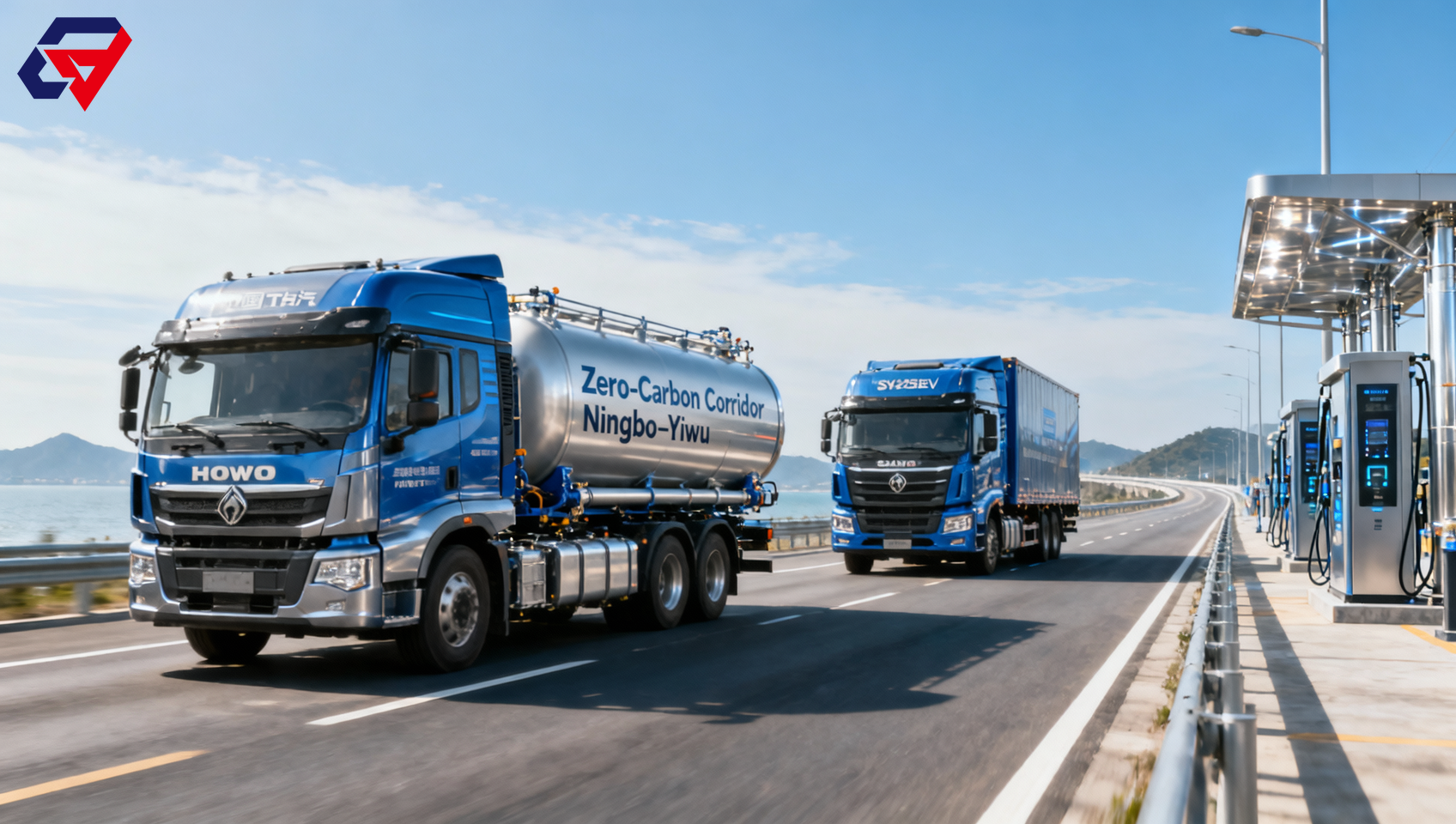
On May 20, 2026, Zhejiang Provincial Department of Transport and Ningbo-Zhoushan Port Group upgraded the 42-kilometer Ningbo Beilun Port–Yiwu International Land Port freight corridor into China’s first ‘zero-carbon heavy-truck refueling corridor’. This development signals material implications for port logistics operators, cross-border supply chain service providers, hydrogen and battery infrastructure developers, and importers in ASEAN markets—particularly those engaged in green logistics pilot frameworks.
Event Overview
On May 20, 2026, the Zhejiang Provincial Department of Transport and Ningbo-Zhoushan Port Group announced the official launch of the Ningbo Beilun Port to Yiwu International Land Port heavy-duty truck corridor as China’s first ‘zero-carbon refueling corridor’. The corridor spans 42 kilometers and now features two megawatt-level liquid-cooled ultra-fast charging stations and three integrated hydrogen refueling and battery-swap stations. It supports high-frequency operation of China National Heavy Duty Truck Group’s HOWO TH7 hydrogen-electric hybrid tractor and SANY SY425BEV battery-swap heavy trucks. The initiative has been incorporated into the China–ASEAN Green Logistics Demonstration Project; importers from Vietnam and Thailand are accelerating coordination on importing vehicles based on this architecture and co-developing localized energy infrastructure.
Industries Affected
Port Logistics Operators
These operators manage containerized freight movement between deep-water ports and inland dry ports. The corridor’s dual-energy (battery swap + hydrogen) infrastructure directly affects their fleet decarbonization timelines, refueling uptime requirements, and interoperability with standardized vehicle platforms. Impact manifests in revised maintenance scheduling, driver training protocols, and real-time energy availability monitoring.
Cross-Border Supply Chain Service Providers
Firms offering end-to-end logistics across China–ASEAN trade lanes face new alignment requirements. As the corridor serves as a demonstration site under the China–ASEAN Green Logistics Demonstration Project, service providers must assess how their current equipment leasing, customs documentation, and emissions reporting systems interface with zero-carbon corridor compliance standards—including vehicle certification, energy source traceability, and cross-jurisdictional refueling data sharing.
Hydrogen & Battery Infrastructure Developers
Companies developing or deploying refueling infrastructure are impacted by the corridor’s technical specifications: megawatt-scale liquid-cooled DC fast charging and multi-modal (H₂ + swap) station integration. This sets an early benchmark for power density, thermal management, and modular station design—especially relevant for developers targeting similar short-haul trunk corridors in coastal provinces or ASEAN partner countries.
ASEAN Importers (Vietnam, Thailand)
Importers in Vietnam and Thailand are actively engaging on vehicle imports and local energy infrastructure cooperation aligned with this corridor’s architecture. Their procurement decisions, regulatory engagement with national transport authorities, and joint venture planning for refueling networks are now influenced by the operational validation and interoperability standards demonstrated on the Ningbo–Yiwu route.
What Enterprises and Practitioners Should Monitor and Do Now
Track official technical annexes and interoperability guidelines
The corridor’s designation as a national pilot implies forthcoming technical specifications—for example, battery module dimensions, hydrogen pressure/quality standards, and data communication protocols between vehicle, charger, and swap station. Enterprises should monitor announcements from Zhejiang Provincial Department of Transport and China Road Transport Association for formalized interface standards.
Assess vehicle platform compatibility ahead of ASEAN market entry
Since Vietnamese and Thai importers are aligning with the HOWO TH7 and SANY SY425BEV platforms, logistics firms evaluating ASEAN expansion should audit whether their existing or planned fleets meet mechanical, electrical, and software interfaces required for seamless operation within this architecture—including telematics integration and refueling authorization systems.
Distinguish policy signal from near-term rollout scope
This is a single 42-km corridor—not a nationwide network. Its value lies in standard-setting, not immediate scalability. Practitioners should avoid overextrapolating to long-haul routes or non-coastal regions until further pilots (e.g., Yangtze River Delta intercity links or Guangdong–Guangxi corridors) are confirmed.
Prepare for energy infrastructure co-location discussions
For firms considering domestic or ASEAN-based logistics hubs, early dialogue with local governments and energy providers on land-use zoning, grid connection capacity, and hydrogen pipeline feasibility becomes more urgent—given that the Ningbo–Yiwu model explicitly combines charging, swapping, and H₂ refueling at shared sites.
Editorial Perspective / Industry Observation
Observably, this corridor functions primarily as a technical and institutional proof point—not yet a commercial scale-up. Its significance lies in consolidating three previously fragmented elements: standardized heavy-truck platforms, co-located multi-energy infrastructure, and cross-border policy framing (via the China–ASEAN Green Logistics Demonstration Project). Analysis shows the initiative is less about immediate tonnage displacement and more about establishing baseline requirements for interoperability, safety certification, and data transparency in zero-emission freight. From an industry perspective, it represents a signal that regulatory attention is shifting from ‘whether’ to ‘how’—with emphasis on harmonized hardware, verifiable energy sourcing, and exportable governance models.
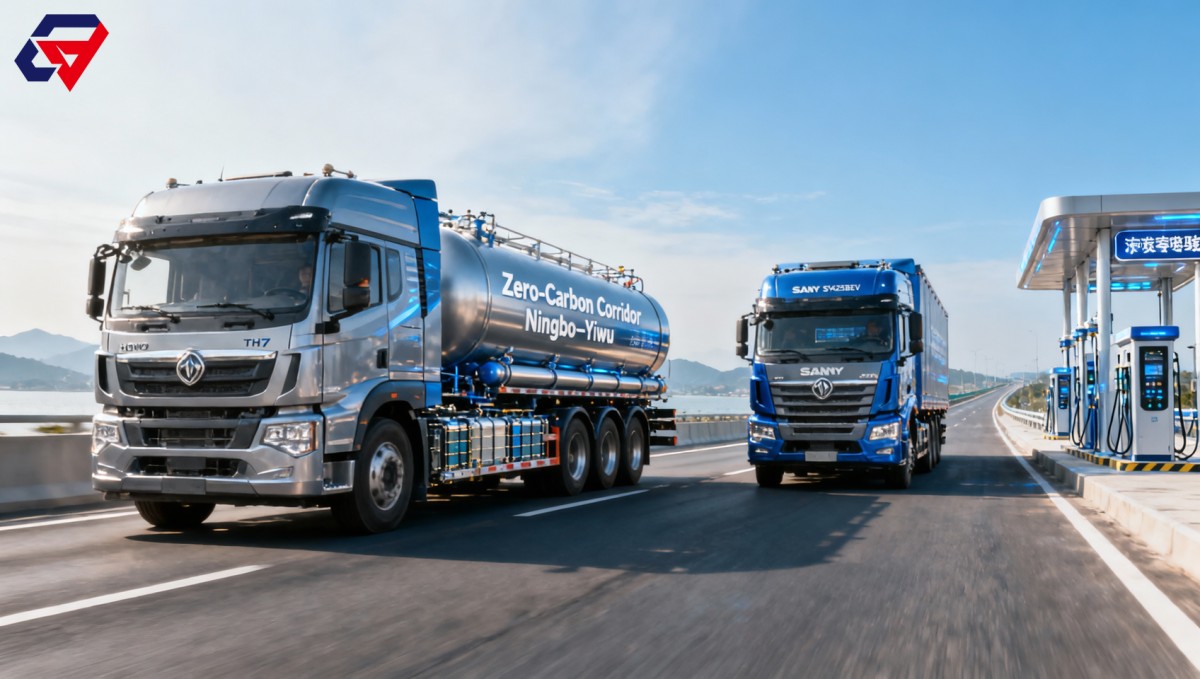
Conclusion: This milestone does not mark the onset of widespread electric or hydrogen heavy-truck adoption, but rather the beginning of structured, cross-sectoral alignment around infrastructure design, vehicle specification, and international cooperation frameworks. It is best understood not as an endpoint, but as a reference architecture—one that invites scrutiny, adaptation, and incremental replication rather than wholesale imitation.
Source Attribution:
• Zhejiang Provincial Department of Transport (official announcement, May 20, 2026)
• Ningbo-Zhoushan Port Group (joint statement, May 20, 2026)
Note: ASEAN importer engagement status and local infrastructure timelines remain subject to ongoing verification and are flagged for continued observation.
NAVIGATION
Send Us A Message