



News
Explore what’s going on around the industry and get the latest from the world of heavy equipment and earth-moving.
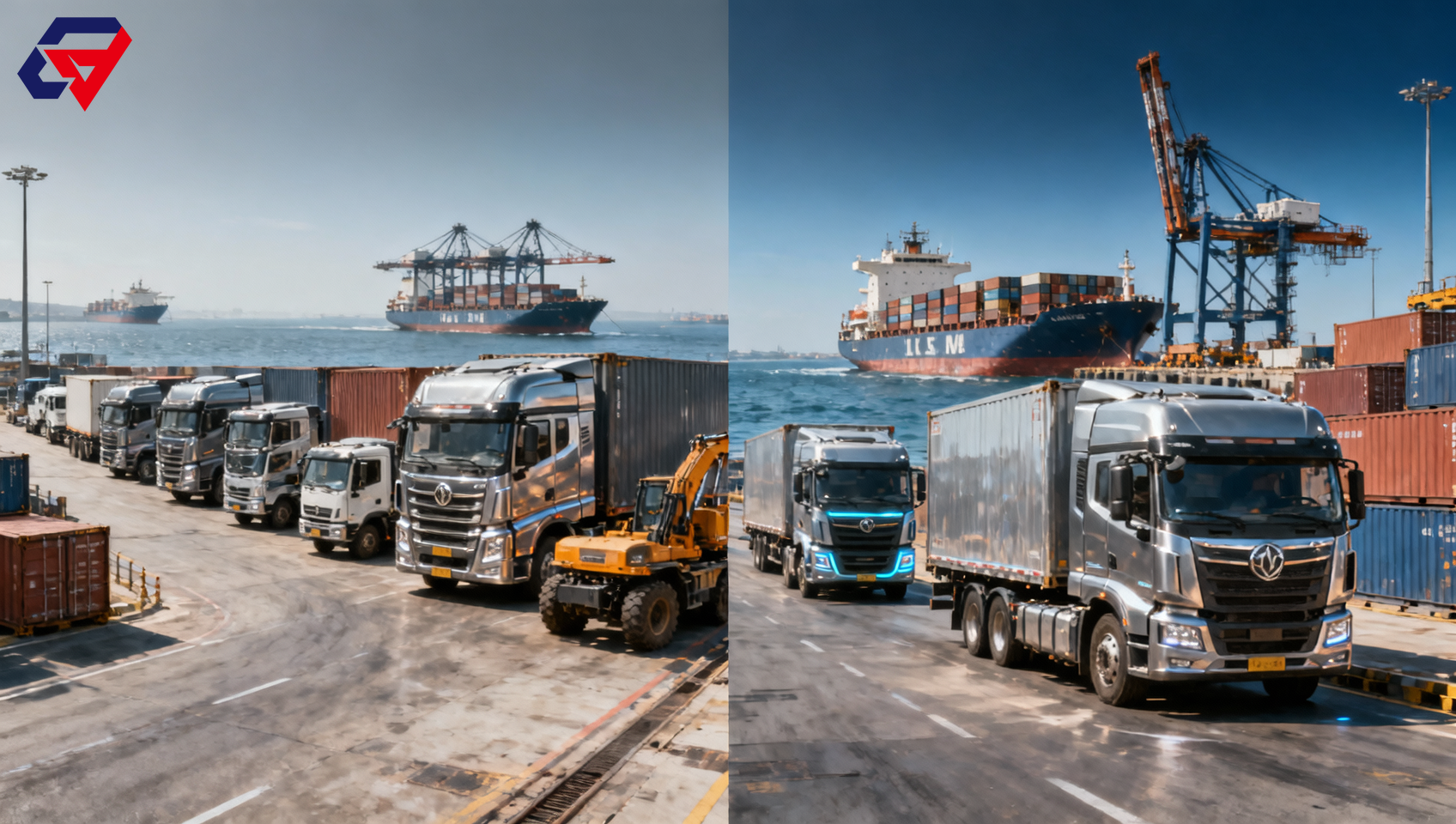
China’s commercial vehicle exports reached 327,900 units in the first quarter of 2026, up 50.28% year on year, according to information disclosed by the China Trade Remedies Information website on May 29, 2026. The update, tied to the March 31, 2026 period end, is especially relevant to commercial vehicle trade, distribution, logistics equipment, mining transport, port operations, and fleet service businesses, because it points to stronger Chinese supply chain delivery capacity and improving fit with overseas market access requirements.

Event Overview
The confirmed information shows that China exported 327,900 commercial vehicles in the first quarter of 2026, representing a year-on-year increase of 50.28%.
The disclosed summary also states that the export mix continued to improve. New energy heavy trucks, electric light trucks, intelligent mining trucks, and special-purpose vehicles were deployed in batches across application scenarios including ports, mines, and urban distribution.
According to the disclosed information, this data directly reflects two confirmed trends: stronger delivery capability in China’s supply chain and improved adaptation to overseas market access requirements. For importers, the figures provide an important reference point for evaluating supply stability, channel expansion timing, and local service responsiveness.
Which Industry Segments Are Affected
Direct trading companies
Direct import-export traders are affected first because the export volume increase changes how overseas buyers assess supply continuity. The impact is mainly reflected in supplier screening, order planning, and contract rhythm. From an industry perspective, when exports rise sharply and the product mix shifts toward new energy and special-use models, traders need to pay closer attention to which vehicle categories are becoming easier to place in real operating scenarios rather than only looking at total shipment volume.
Commercial vehicle manufacturers and assembly-related businesses
Manufacturing-side businesses are affected because the disclosed export growth and product mix optimization indicate that overseas acceptance is not concentrated in only one vehicle type. The impact mainly appears in production scheduling, model allocation, and after-sales preparation for application-specific vehicles. Analysis shows that batch deployment in ports, mines, and city distribution makes scenario matching more important for export business, especially for vehicles such as new energy heavy trucks, electric light trucks, intelligent mining trucks, and special-purpose vehicles.
Channel distributors and overseas market development teams
Distributors and channel operators are affected because the disclosed data gives a clearer signal on expansion timing. The impact is mainly reflected in channel rollout pace, inventory coordination, and regional service readiness. Observably, stronger supply delivery and better alignment with overseas access requirements can change the practical speed at which distributors consider adding commercial vehicle lines or expanding category coverage.
Supply chain and logistics service providers
Supply chain service providers, including shipping coordination and delivery support businesses, are affected because rising export volume can alter operational priorities. The impact mainly appears in delivery scheduling, fulfillment predictability, and coordination between vehicle categories and destination requirements. Current data is worth watching because importers are explicitly using it to assess supply stability, which means logistics reliability becomes more visible in commercial decision-making.
Local after-sales and fleet service operators
Businesses involved in localized service response are affected because the disclosed information highlights local service responsiveness as a key basis for importer evaluation. The impact is mainly reflected in service network planning, maintenance readiness, and communication with fleet customers in use-case-driven segments such as ports, mining, and urban delivery. From an industry perspective, product exports alone are not the only issue; the ability to support vehicles after delivery is becoming part of market acceptance.
What Companies and Practitioners Should Watch and How to Respond
Track follow-up official disclosures and keep facts separate from assumptions
Companies should continue monitoring official updates related to commercial vehicle exports, product categories, and market access descriptions. Observably, the disclosed data confirms strong first-quarter performance, but businesses should distinguish between confirmed export results and broader assumptions about sustained long-term demand. This is especially important for procurement teams and channel planners setting quarterly targets.
Focus on the vehicle categories and use cases named in the disclosure
Businesses should prioritize attention on the categories explicitly mentioned in the disclosed information: new energy heavy trucks, electric light trucks, intelligent mining trucks, and special-purpose vehicles. Analysis shows that these categories matter not just because they were exported, but because they were deployed in batches in ports, mines, and urban distribution. That makes scenario-based demand assessment more practical than relying on aggregate export numbers alone.
Review supply stability and service readiness together
Importers, distributors, and fleet-facing teams should evaluate supply capacity together with local response capability. The disclosed information explicitly connects export performance with supply chain delivery strength and local service responsiveness. Current attention should therefore go to lead-time communication, spare-parts planning, and service coordination for vehicles entering operational environments with higher uptime requirements.
Align channel expansion pace with actual delivery and access conditions
Companies exploring new distribution channels should avoid treating the export surge as a standalone expansion trigger. From an industry perspective, the more practical response is to match channel decisions with real delivery capacity and the degree of fit with overseas access requirements already reflected in the disclosed information. This helps reduce the risk of expanding faster than supply support and service execution can sustain.
Editor’s View / Industry Observation
Observably, this update is more than a simple export-growth headline. It points to a combination of volume expansion and product-structure improvement, which is why the news matters across multiple parts of the commercial vehicle value chain.
Analysis shows that the first-quarter result should be understood as a meaningful signal rather than, by itself, a complete long-term conclusion. The confirmed facts support the view that Chinese commercial vehicle exports are gaining traction in application-specific segments, especially where new energy, intelligent, and special-purpose models are being deployed in batches.
What is currently more worth watching is whether the same strengths highlighted in the disclosure—delivery capability, overseas access adaptation, and local service responsiveness—continue to translate into stable business execution. From an industry perspective, that is the area where trade companies, distributors, and service operators will need sustained attention.
In summary, the sharp rise in China’s commercial vehicle exports in the first quarter of 2026 matters because it affects not only vehicle shipment figures, but also how importers, distributors, manufacturers, and service providers assess supply stability and market rollout timing. A neutral reading is that the data already reflects real progress in export structure and delivery capability. More appropriately, it should be understood as an important industry signal that warrants continued observation, especially in product categories and operating scenarios already identified in the disclosed information.
Source Information
Main source: China Trade Remedies Information website, disclosure dated May 29, 2026.
Time reference in the disclosed event information: March 31, 2026, covering China’s first-quarter 2026 commercial vehicle export performance.
Items requiring continued observation: whether the disclosed export growth, product-mix optimization, and importer evaluation factors continue in subsequent official releases and business implementation stages.
NAVIGATION
Send Us A Message