



News
Explore what’s going on around the industry and get the latest from the world of heavy equipment and earth-moving.

China Customs began applying a revised export declaration standard for motor vehicles on August 1, 2026, with new mandatory reporting items for heavy truck exports tied to OTA upgrade capability and cybersecurity architecture level. For exporters, importers, procurement teams, compliance staff, and delivery coordinators, this is not just a form update: it directly affects customs filing accuracy, document readiness, and shipment timing, especially where overseas buyers now need verifiable cybersecurity classification materials from Chinese suppliers.
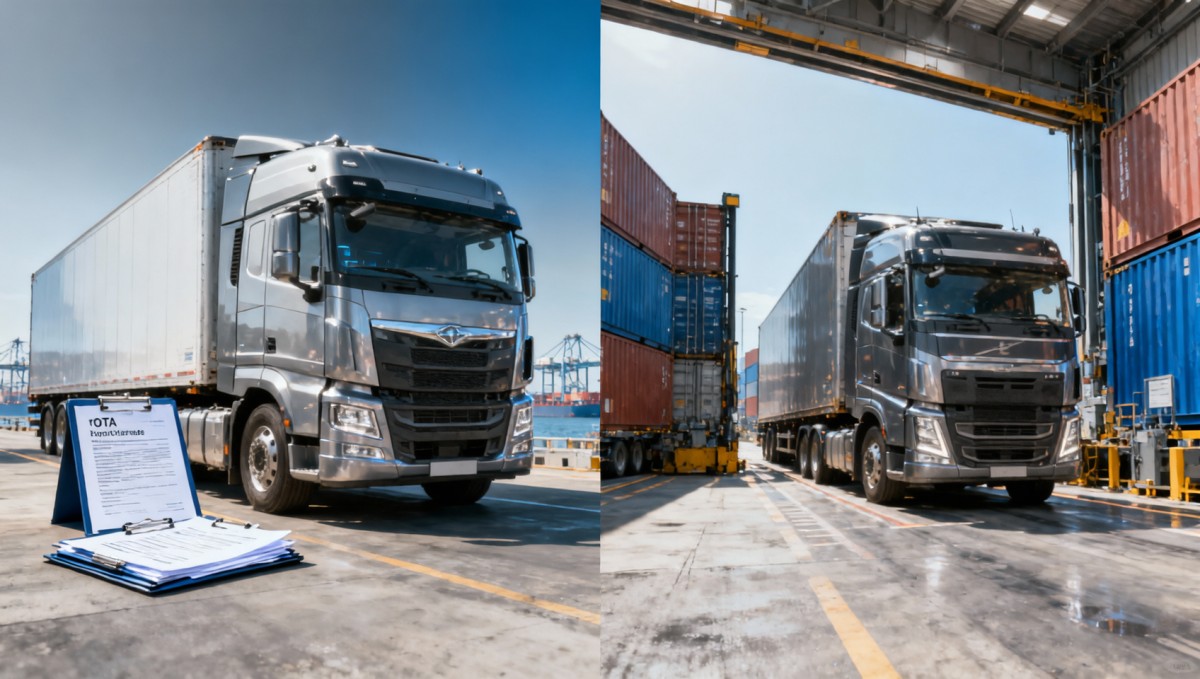
What the new declaration requirement now includes
According to the provided event information, the General Administration of Customs of China fully activated a new version of the motor vehicle export declaration specification on August 1, 2026. For heavy trucks, two fields have become mandatory in export declarations: “OTA remote upgrade capability (Y/N)” and “cybersecurity architecture level (ISO/SAE J3061 Level 1–3)”.
The same information states that incomplete declarations or inaccurate information may lead to inspection delays and returned filings. The stated purpose of the change is to align with EU ECE R152 and U.S. NHTSA cybersecurity guidance and to improve transparency in China’s heavy truck export data. Overseas importers are also expected to update procurement checklist templates so that Chinese suppliers can provide verifiable proof of cybersecurity level.
Where the pressure is likely to appear first
Export filing moves closer to technical substantiation
From an industry perspective, heavy truck exporters are likely to feel the impact first because the new fields sit directly inside the customs declaration workflow. The practical issue is no longer limited to preparing shipping documents; exporters now need internal access to product-side information on OTA capability and cybersecurity architecture classification, and that information must be consistent enough to withstand customs scrutiny if questions arise.
Procurement documents may need revision on both sides
Analysis shows that procurement teams, especially those supporting cross-border vehicle sourcing, may need to revise supplier questionnaires, technical schedules, and purchase checklists. The reason is straightforward: if overseas buyers must obtain verifiable cybersecurity level evidence, then the purchasing process can no longer treat cybersecurity architecture as an informal technical note. It starts to function more like a required trade document input.
Compliance and certification functions may face earlier involvement
What deserves closer attention is the role of compliance-related teams and service providers. Even though the provided information does not describe a separate certification procedure, the requirement for a verifiable cybersecurity level suggests that technical documentation, internal review records, or supporting proof may need to be prepared earlier in the export cycle. For businesses already handling market-specific compliance requests, this may shift some work from post-order clarification to pre-shipment validation.
Logistics and delivery planning could be affected by filing quality
Supply chain and delivery teams may also be affected because the stated consequence for incomplete or inaccurate filing is inspection delay or returned declarations. Observably, that turns data quality into a scheduling issue. Where shipment windows are tight, missing or inconsistent cybersecurity-related entries could create avoidable disruption even if the vehicle itself is otherwise ready for export.
What companies should review now
Check whether internal data can support the customs fields
Companies involved in heavy truck exports should first verify whether product, engineering, export documentation, and customs filing teams are using the same description of OTA capability and cybersecurity architecture level. Analysis shows that the immediate risk is not only omission, but mismatch between technical records and declared content.
Update buyer-facing and supplier-facing templates
Another practical point is template control. Since the provided information indicates that overseas importers need to update procurement checklist templates, exporters and buyers should review RFQ documents, purchase specifications, declaration support files, and document request lists. It is more appropriate to understand this as a documentation alignment task that reaches beyond customs brokers alone.
Prepare verifiable supporting materials rather than basic labels
What deserves closer attention is the phrase requiring verifiable proof of cybersecurity level. The available information does not define the exact form of acceptable proof, so companies should avoid assuming that a simple self-declared label will always be sufficient. At this stage, the sensible focus is on readiness of technical documents and consistency of supporting records rather than on any unconfirmed execution standard.
Watch for shifts in delivery coordination and trade risk allocation
Analysis shows that businesses should also review how declaration accuracy risk is allocated across exporter, supplier, broker, and importer. Where shipment milestones depend on customs clearance, the addition of mandatory cybersecurity-related fields may influence document cut-off timing, pre-shipment checks, and communication responsibilities between commercial and technical teams.
Why this looks like an execution signal, not just a policy note
Observably, this development is better understood as a rule already entering operational use rather than a distant policy direction. The reason is that the change is tied to mandatory declaration fields and to stated customs consequences for incomplete or inaccurate submissions. At the same time, analysis also suggests that parts of the execution picture still need monitoring, especially how supporting proof will be reviewed in practice and how consistently market participants update their procurement and filing routines.
From an industry perspective, the significance is less about a new concept and more about where cybersecurity information now appears in the trade process. Once such data moves into a customs declaration structure, it becomes relevant not only to engineering and compliance teams but also to ordering, shipment planning, and buyer-seller document exchange.
How the market may need to read this change
This update should be read as a concrete compliance signal for heavy truck export operations, with immediate relevance for declaration accuracy, procurement documentation, and delivery planning. It does not by itself confirm every downstream enforcement detail, but it clearly indicates that cybersecurity-related product information is becoming part of export trade execution. The most balanced reading for now is that this is an implemented filing change with broader practical implications that still require close observation as market practice develops.
Basis of this article and what still needs verification
This article is based on the user-provided title, event date, and event summary. For this type of development, relevant source categories typically include official notices, releases from regulatory authorities, customs or trade administration information, industry association updates, standards organization documents, and reporting by authoritative trade media. A specific official source link was not provided in the input, so the exact official publication path still needs to be verified on an ongoing basis. Further follow-up should focus on detailed implementation language, acceptable proof standards, procurement document changes, bidding or specification updates, industry feedback, and how exporters and importers execute the requirement in practice.
NAVIGATION
Send Us A Message