


News
Explore what’s going on around the industry and get the latest from the world of heavy equipment and earth-moving.

On August 16, 2026, China’s central authorities issued an opinion on delivering higher-level and higher-quality energy saving and carbon reduction work, and for the first time in a national-level policy document explicitly included electric and hydrogen heavy trucks in the category of strategic national necessities. The same document also set out work on zero-carbon transport corridors and upgrades to hydrogen refueling infrastructure. For companies involved in hydrogen commercial vehicles, overseas procurement, certification review, export compliance, and application scenarios such as port and steel plant short-haul operations, the development is worth close attention because it changes how policy priority is signaled to the market.
What the policy document explicitly changed
According to the information provided, the policy was issued on August 16, 2026 by the General Office of the CPC Central Committee and the General Office of the State Council in the form of an opinion on energy saving and carbon reduction. The confirmed change is that electric and hydrogen heavy-duty trucks were, for the first time, clearly identified in a national-level policy document as a strategic national necessity category.
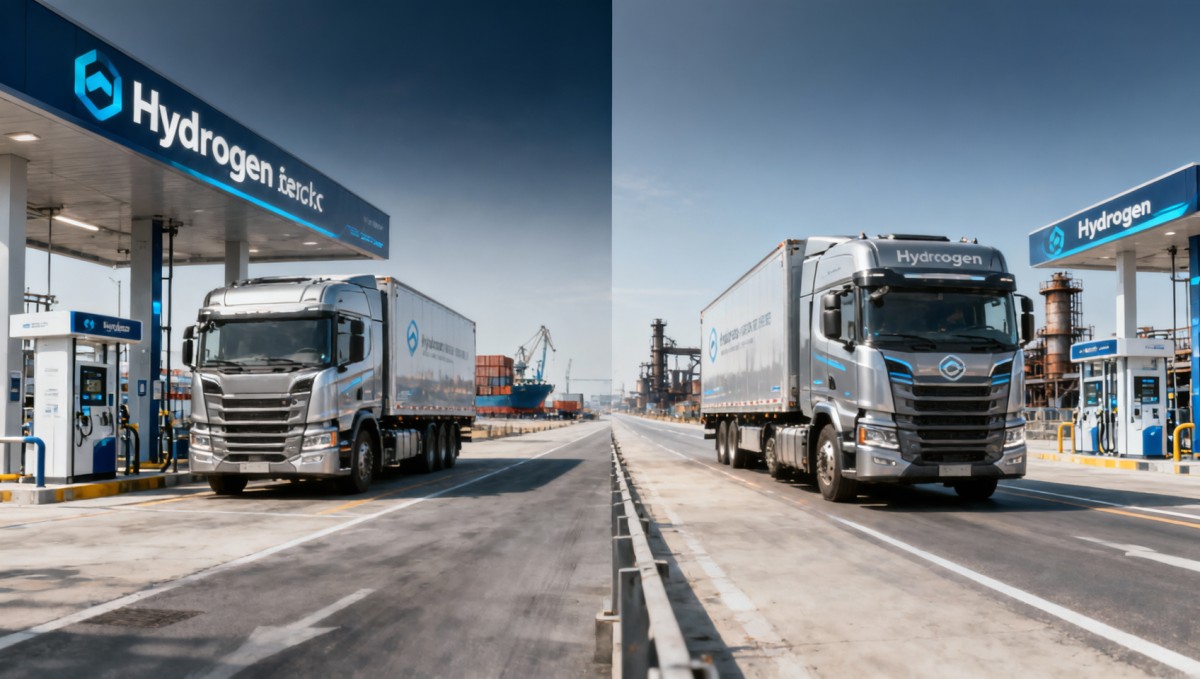
The same policy signal also covered the construction of zero-carbon transport corridors and the upgrading of hydrogen refueling infrastructure. The event summary further indicates that this policy is directly relevant to how overseas importers assess hydrogen heavy truck technology routes, certification access, operating scenarios including short-haul use in ports and steel plants, and the compliance pathway for exports of China-made hydrogen commercial vehicles.
Where this may start to matter across trade and delivery decisions
Export-facing vehicle suppliers may face earlier compliance review
From an industry perspective, manufacturers and exporters of hydrogen heavy trucks may find that overseas buyers place greater weight on certification readiness, technical documentation, and use-case clarity during supplier screening. The policy does not itself confirm new export rules, but analysis suggests that once hydrogen heavy trucks are elevated in a national policy framework, importers may review whether product specifications, conformity materials, and operating scenario descriptions are consistent with the intended market entry path.
Procurement teams may reassess application fit rather than only vehicle specs
For procurement parties, the policy signal may shift attention from the vehicle alone to the surrounding deployment conditions. The event summary specifically mentions application scenarios such as port and steel plant short-haul operations. That suggests buyers may increasingly compare not just product performance claims, but also whether the supplier can support operating conditions, fueling access assumptions, and project delivery documents linked to those scenarios.
Certification and testing service providers may see broader pre-tender questions
Analysis suggests certification-related companies and testing institutions may be drawn in earlier in project preparation. If overseas importers are reassessing technology routes and market access conditions, they may request more detailed evidence on certification status, technical compliance, and the basis for application claims. This does not mean new certification rules have already been published, but it does raise the likelihood that documentation quality and interpretation of existing access requirements will become more important in commercial discussions.
Supply chain and after-sales partners may need clearer delivery assumptions
For integrators, logistics service providers, and after-sales support teams, the practical issue may be whether infrastructure upgrades and corridor planning alter delivery expectations. At this stage, the provided information confirms policy direction, not implementation details. Even so, observation suggests counterparties may ask suppliers to clarify service coverage, spare-parts preparedness, traceability records, and post-delivery support assumptions before moving ahead with purchases tied to hydrogen truck deployment.
What companies should review now
Check whether certification files match the target market narrative
Companies involved in exports should review whether product dossiers, test materials, technical statements, and application descriptions are aligned with the markets they are targeting. The event summary shows that technology route assessment and certification access are already part of importer attention. That makes consistency across product claims, certification materials, and commercial proposals a practical issue, even if no new detailed rule text has yet been provided.
Track official wording on corridors and refueling infrastructure
What deserves closer attention is how later official documents, implementation notices, or project-level materials describe zero-carbon transport corridors and hydrogen refueling upgrades. The current policy signal is clear at a directional level, but the supplied information does not confirm execution standards, regional arrangements, or project sequencing. Companies should therefore treat subsequent wording as a key reference point for planning bids, delivery schedules, and partner selection.
Re-examine tender documents and buyer questionnaires
Firms supplying hydrogen heavy trucks or related systems may need to review bid files, technical response templates, and buyer due-diligence materials. Analysis suggests that when procurement decisions are influenced by policy prioritization, questions may expand beyond core equipment performance to include scenario suitability, compliance pathway, certification readiness, and after-sales capability. Preparing these materials in advance may reduce friction in cross-border commercial evaluation.
Assess export risk around service and traceability
The event summary links the policy to the compliance path for exports of Chinese hydrogen commercial vehicles. Based on that, exporters should closely assess how quality records, service commitments, and traceability materials are organized for external review. This should be understood as a risk-control recommendation rather than confirmation of a new mandatory filing requirement.
Why this reads as a policy signal more than a fully defined rule set
At this stage, it is more appropriate to understand the development as a strong execution signal within national policy language, rather than as a complete set of final operating rules. The confirmed facts show a clearer policy status for electric and hydrogen heavy trucks, plus support for zero-carbon transport corridors and hydrogen refueling upgrades. What remains to be observed is how that policy language is reflected in later certification interpretation, procurement conditions, project documents, trade execution, and market feedback.
From an editorial perspective, this matters because policy categorization often changes commercial confidence before it changes every procedural detail. For overseas buyers in the EU, the Middle East, and Southeast Asia mentioned in the event summary, the immediate effect may be on evaluation logic: whether hydrogen heavy trucks are viewed as a policy-backed route with clearer domestic application grounding and a more discussable export compliance path. That is still an analytical reading, not a confirmed market outcome.
How this update is best understood for current decision-making
The most balanced reading is that the August 16, 2026 policy marks a meaningful shift in official signaling around hydrogen heavy trucks, especially where infrastructure deployment, zero-carbon freight corridors, and export-facing commercial assessment intersect. It does not, based on the supplied information, prove that all related implementation rules are already settled. For companies across manufacturing, procurement, certification, and export delivery, the practical response is to treat this as a development that can affect qualification review and project discussions now, while continuing to verify how detailed requirements are defined in later documents and market practice.
Basis of this article and what still needs verification
This article is generated solely from the user-provided news title, event date, and event summary. No specific official link was provided in the input, so the original official source link remains to be independently verified.
For this type of development, commonly relevant source categories would include official government announcements, releases from regulatory authorities, customs or trade administration information, industry association updates, standard-setting documents, and reporting by authoritative media. Further observation is still needed on detailed policy implementation, certification interpretation, changes in tender documents, trade execution, industry feedback, and how companies actually respond in procurement and delivery practice.
NAVIGATION
Send Us A Message