


News
Explore what’s going on around the industry and get the latest from the world of heavy equipment and earth-moving.
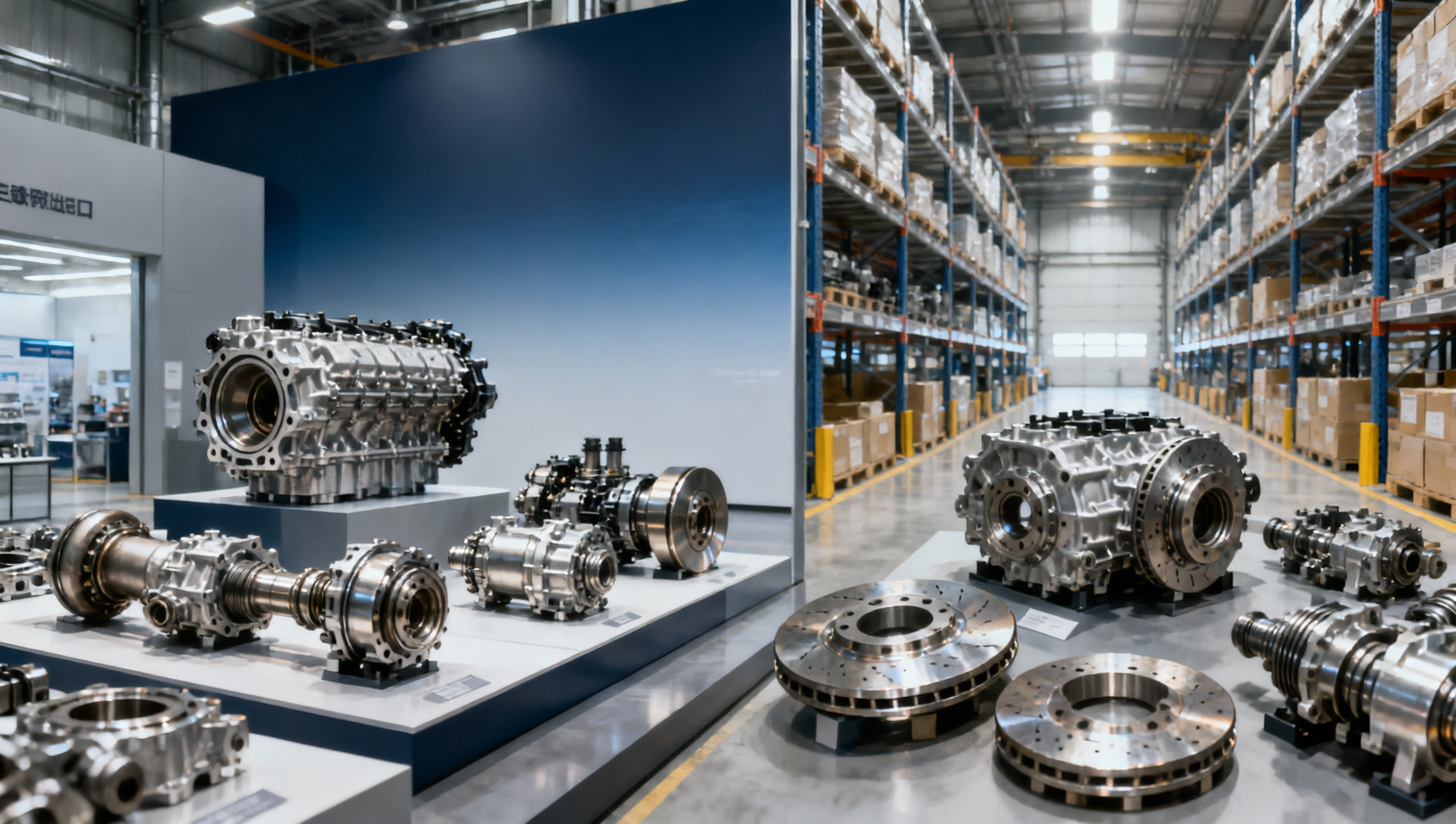
On 2026-08-13, official data showed that the heavy-duty truck parts section at the first China Yiwu Auto and Motorcycle Parts Fair recorded an average foreign trade order conversion rate of 28.6%, about 40% above the industry exhibition average. From an industry perspective, this is more than a trade-fair performance figure: it signals a more efficient export coordination path for heavy-duty parts, where buyer verification, order placement, inspection, and delivery are being compressed into a faster and more traceable process.

What the Yiwu heavy-duty parts section has actually built
According to the official disclosure, the heavy-duty truck parts section at YAMPFAIR 20261 achieved an average foreign trade order conversion rate of 28.6%. The exhibition is supported by 13,000 resident overseas buyers, 2,650 business institutions based in Yiwu, and a direct connection mechanism linking the Wenzhou, Yuhuan, and Taizhou industrial cluster within two hours. Together, these elements have formed a closed-loop export channel described as “exhibition-market-factory,” which shortens the cycle for overseas buyers to inspect factories, place orders, and complete inspection.
How the shift may affect trade, compliance, and delivery links
Exporters are facing a faster decision cycle
For direct exporters of heavy-duty parts, the practical impact lies in the shortening of the buyer decision process. When a venue can connect exhibition inquiries with nearby manufacturing capacity and on-site verification, the business focus moves toward whether product specifications, documentation, and factory readiness can support rapid confirmation. That raises the importance of quotation accuracy, sample consistency, and the ability to respond quickly to buyer due diligence.
Manufacturers need cleaner technical and quality records
For manufacturers in the supply chain, the key pressure is not just production capacity but the completeness of technical documents and quality records. In a setting where overseas buyers can move from visit to order more quickly, any gap in inspection reports, product traceability materials, or specification alignment may slow conversion. The change is less about new rules being announced and more about higher execution expectations in trade workflows.
Service providers must support verification and handover
Testing agencies, inspection intermediaries, logistics providers, and other supply chain service firms are also affected because the export path is becoming more tightly linked. Their role is to help buyers and sellers complete verification, shipment preparation, and handover without losing time between exhibition contact and factory follow-up. Where documentation or inspection timing is weak, the faster conversion environment can expose bottlenecks more quickly.
What companies should watch now
Keep compliance materials ready for faster buyer screening
Companies that want to use Yiwu-type platforms as an export entry point should check whether their product files, test results, and factory credentials can stand up to faster screening. The official data suggests buyers are already using the exhibition as a practical channel for order conversion, so incomplete materials may become a direct obstacle rather than a secondary issue.
Track whether execution signals turn into clearer market rules
At this stage, the more relevant question is not whether the exhibition is effective, but whether this model becomes a broader execution signal for how overseas buyers evaluate heavy-duty parts suppliers. Observably, the closed-loop “exhibition-market-factory” structure may push the market toward shorter verification windows and more standardized handover steps, but the exact compliance and transaction requirements still need continued observation.
Focus on delivery readiness and after-sales traceability
For exporters, faster order conversion only helps if delivery and after-sales systems can keep pace. That means checking whether production scheduling, packing, shipment documents, and traceability records can support repeat transactions. In a faster-moving trade environment, the ability to answer follow-up quality questions can matter as much as the initial order.
What this development most likely signals
Analysis shows that this information should be understood primarily as an execution signal rather than a completed regulatory change. The data reflects a trade platform that is already improving conversion efficiency, but it does not by itself confirm any new policy, certification rule, or mandatory market standard. For the industry, the more important takeaway is that buyers are responding to a structure that reduces transaction friction, and that may gradually reshape how suppliers prepare for export-facing scrutiny.
At the same time, it remains necessary to watch whether this model is followed by clearer compliance expectations, more specific inspection language in buyer requirements, or tighter documentation demands in downstream transactions. In other words, the commercial signal is real; the rule-level effect still needs further verification.
How to read this trend now
For the heavy-duty auto parts sector, this is best read as a practical trade signal with execution value. It shows that a regional exhibition can function as a more direct export conversion channel when buyer resources, nearby manufacturing capacity, and verification logistics are aligned. It does not yet justify broad claims about industry-wide rule changes, but it does indicate where export competition is becoming more operational and more documentation-driven.
Source basis and follow-up
This article was generated from the user-provided title, event date, and event summary. The types of sources normally associated with this kind of development include official announcements, trade and customs information, industry association notices, standard-setting documents, and authoritative media reports. Specific official source links were not provided in the input, so they still need to be verified. Follow-up should continue to focus on policy details, certification execution language, buyer requirements, bidding documents if any emerge, and actual feedback from enterprises and purchasers.
NAVIGATION
Send Us A Message