



News
Explore what’s going on around the industry and get the latest from the world of heavy equipment and earth-moving.
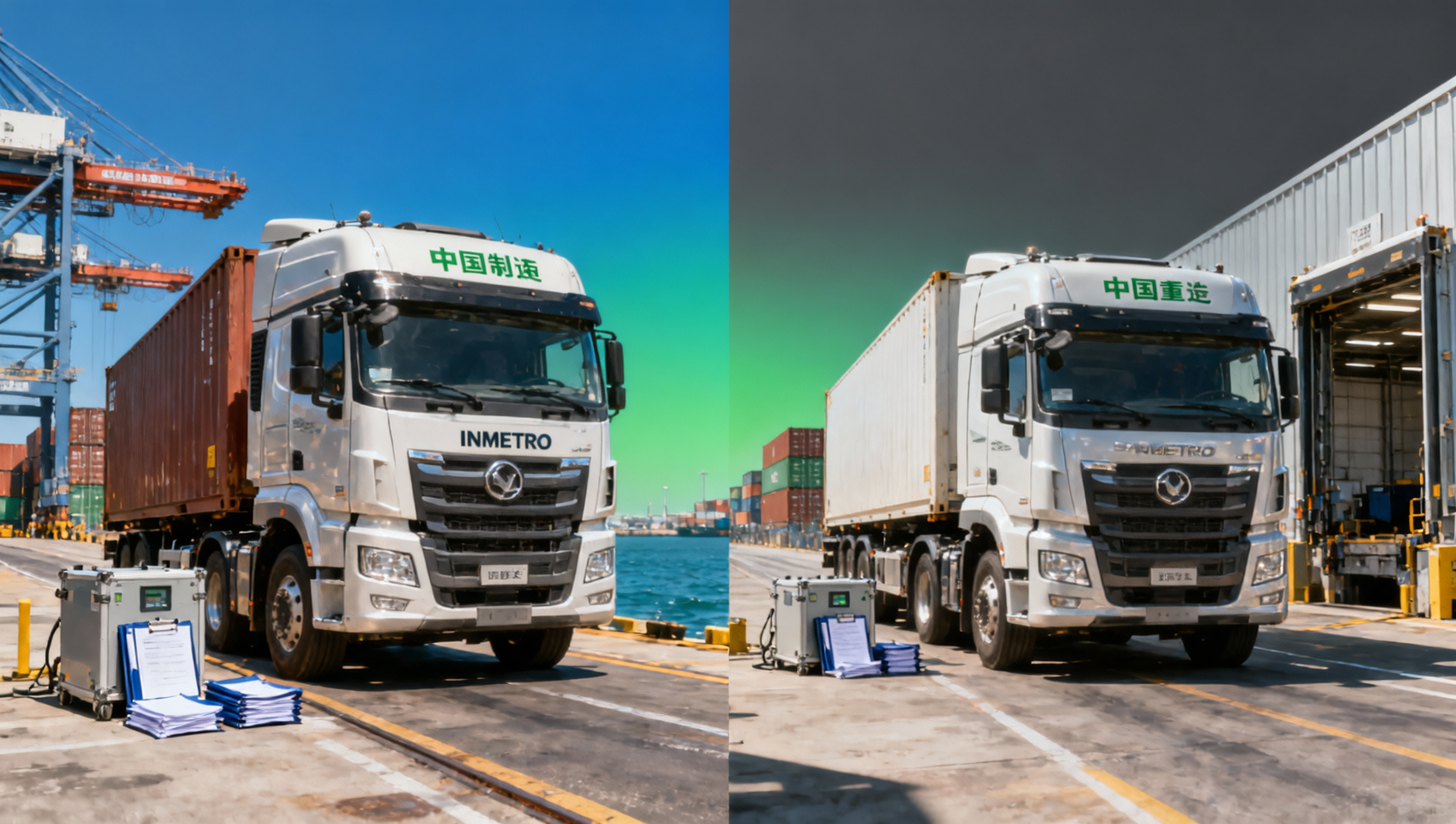
Brazil's heavy truck import rules changed on September 1, 2026, after INMETRO's August 9, 2026 notice introduced mandatory certification for Chinese-made heavy trucks entering the Brazilian market. For distributors, importers, customs teams, and manufacturers serving South America, the update deserves close attention because it links market access directly to product compliance, documentation readiness, and delivery timing rather than to commercial terms alone.

What the new requirement formally covers
According to Portaria 142/2026 issued by INMETRO, all Chinese-manufactured heavy trucks imported into Brazil must obtain mandatory INMETRO product certification starting from September 1, 2026. The required scope includes vehicle-level EMC, braking systems, and emission control modules. Trucks without certification will be refused at the port, and a penalty equal to 30% of the cargo value will apply.
Where the pressure will appear across the business chain
Import and distribution operations face immediate clearance risk
From an industry perspective, distributors and direct trading companies are likely to feel the change first because the rule affects whether vehicles can clear ports at all. The main pressure point is the customs and delivery stage: a truck that is commercially ready but not certification-ready can no longer move through the process in the usual way. What deserves closer attention is whether compliance review is being treated as an early procurement condition rather than a final shipping document issue.
Chinese manufacturers will be pulled deeper into compliance preparation
Analysis shows that manufacturers supplying Brazil cannot view this as only a downstream importer problem. Because the certification scope covers EMC, braking systems, and emission control modules, the operational impact is tied to how product files, test alignment, and model-level compliance evidence are prepared before export. The immediate issue is not broader market strategy, but whether export-ready units can be matched with the certification requirements now enforced in Brazil.
Supply chain and service providers may see longer coordination cycles
Observably, freight forwarders, customs brokers, and other supply chain service providers may be affected through longer coordination windows and tighter document checks. The policy summary already points to changes in customs clearance procedures, procurement cycles, and local compliance costs. That means service providers will likely need earlier confirmation of certification status and more precise shipment planning to reduce the risk of port rejection.
Procurement teams will need to reassess timing and contract execution
For buyers and channel partners in the South American market, the practical impact may show up in order timing, delivery expectations, and vendor communication. The issue is not only unit price, but whether suppliers can support compliant delivery into Brazil under the new rule. In operational terms, procurement teams may need to focus more closely on lead-time assumptions and the certification status attached to each shipment.
What companies should watch now
Track official wording and any follow-up clarification
What deserves closer attention is the exact regulatory language and any subsequent official interpretation tied to Portaria 142/2026. In practice, companies should distinguish between the confirmed rule already stated and any later clarification on implementation details, document standards, or procedural handling.
Check certification readiness before shipment scheduling
For firms already shipping or preparing to ship into Brazil, the immediate operational question is whether certification has been completed before cargo reaches the port. Given the stated consequence of port refusal and a 30% cargo-value penalty, shipment timing and compliance timing can no longer be managed separately.
Rework internal document flow and supplier coordination
Analysis shows that this policy is as much a document-control issue as a regulatory one. Importers and suppliers should pay closer attention to how certification records, product scope, and shipment files are aligned, especially when multiple parties handle manufacturing, export, customs, and local distribution.
Prepare customer communication around lead times and costs
The policy summary directly indicates pressure on procurement cycles and local compliance costs. That makes customer-facing communication a practical priority: companies should be ready to explain why schedules, pricing assumptions, or delivery commitments may require revision under the new certification framework.
Why this matters beyond a single customs rule
Observably, this development is more appropriate to understand as both an immediate market-entry condition and a broader compliance signal. The immediate result is clear: uncertified Chinese heavy trucks face rejection at Brazilian ports and a defined financial penalty. The broader meaning still needs continued observation, especially in how companies adjust workflows, how strictly implementation is applied in practice, and whether the rule reshapes how suppliers approach Brazil within the South American market.
How the market is likely to read this update
At this stage, the most balanced reading is that Brazil has turned certification from a supporting compliance task into a front-end commercial requirement for Chinese heavy truck imports. The rule already creates a concrete operational threshold, but its longer-term commercial effect should still be assessed through actual execution in clearance, procurement planning, and local cost management. It is more appropriate to understand this as an active regulatory change with immediate business consequences and ongoing practical implications still worth monitoring.
Basis of this report and what still needs verification
This article is based on the user-provided news title, event date, and event summary concerning INMETRO Portaria 142/2026 and its application from September 1, 2026. For this type of development, relevant source categories typically include official regulatory notices, company statements, industry association updates, authoritative media reporting, and standards-related documents. A specific official source link was not provided in the input, so the exact underlying publication path still requires continued verification. Further monitoring should focus on any subsequent official clarification, implementation detail, or procedural guidance affecting certification scope, customs handling, and compliance execution.
NAVIGATION
Send Us A Message