



News
Explore what’s going on around the industry and get the latest from the world of heavy equipment and earth-moving.

On August 15, 2026, a new compliance threshold takes effect for imported heavy truck rubber components entering the EU market. Following ECHA’s August 6 update to the SVHC Candidate List, three substances used in air suspension bushings, brake hoses, and seals for heavy trucks were added to the list. For importers of parts containing more than 0.1% w/w of these substances, SCIP notification becomes a near-term operational issue rather than a background regulatory topic. This is particularly relevant for Chinese rubber component exporters, EU importers, and overseas distributors whose inspection and inbound procedures now face tighter documentation demands.
What the August update formally changes
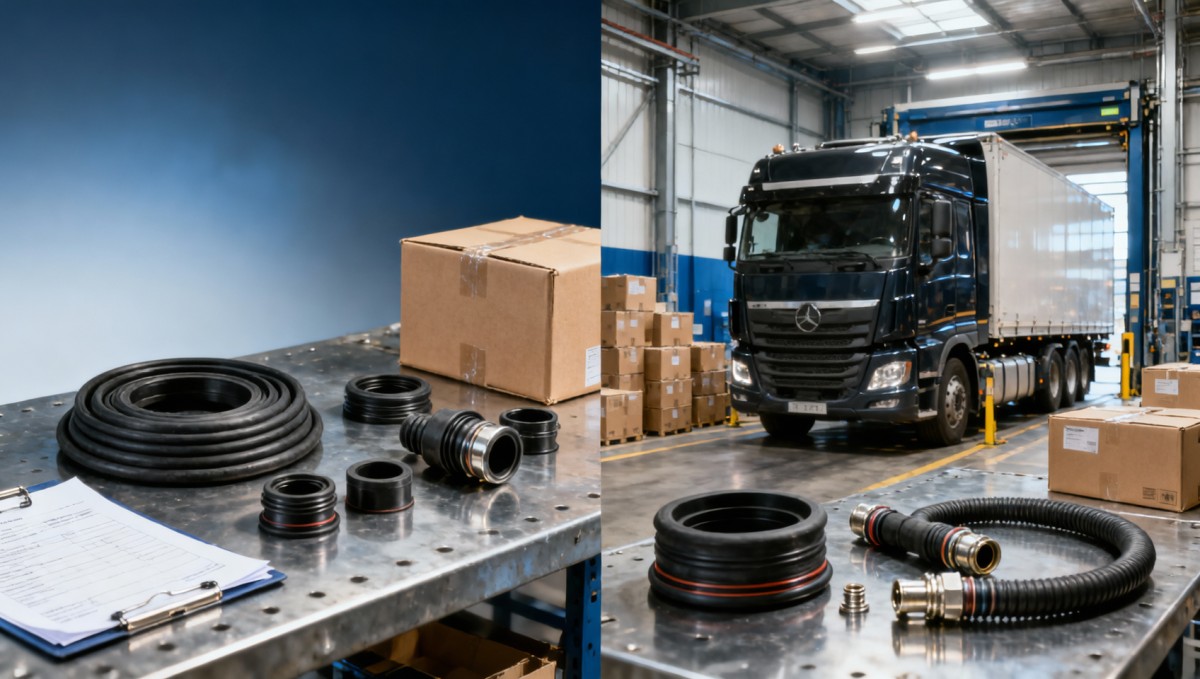
The confirmed change is that ECHA updated the SVHC Candidate List on August 6, 2026 and added three substances identified in the input information: CAS No. 124-77-3, 80-05-7, and 101-70-2. These substances are described as being used in heavy truck rubber parts including air suspension bushings, brake hoses, and seals.
From August 15, 2026, imported heavy truck rubber components containing more than 0.1% w/w of the listed substances must complete SCIP database notification. The stated compliance risk for failure to notify includes customs clearance delays and possible seizure or confiscation. The information provided also makes clear that this requirement directly affects the export compliance pathway of Chinese rubber parts suppliers and the inbound inspection process of overseas distributors.
Where the pressure is likely to appear first
Export shipments tied to EU-bound heavy truck parts
From an industry perspective, direct trading companies and exporters are likely to feel the impact first because the change is tied to import compliance from a fixed date. The main pressure point is shipment readiness: once a product falls above the 0.1% w/w threshold for the newly listed substances, SCIP notification becomes part of the practical route to market. What deserves closer attention is whether product declarations, composition records, and shipment documentation are aligned before goods move.
Manufacturing and formulation review in rubber components
For processing and manufacturing businesses, the issue is less about the announcement itself and more about which product lines may contain the three listed substances. Parts such as air suspension bushings, brake hoses, and seals are explicitly within the scope described in the input. Analysis shows that the operational impact is likely to sit in material verification, product screening, and internal confirmation of whether a component exceeds the reporting threshold.
Distributor receiving and warehouse intake checks
Overseas distributors may be affected through receiving inspection and inventory intake procedures. The provided information explicitly points to changes in warehouse-side inspection workflows. Observably, this means distributors need to pay closer attention to whether incoming heavy truck rubber parts have the necessary SCIP-related information in place before stock is accepted or circulated further.
Supply chain coordination around customs timing
Supply chain service providers and purchasing-side coordinators may also face indirect pressure because the stated consequences include customs delays. In practice, even when the rule applies to the product itself, the disruption often appears in scheduling, document handover, and shipment release timing. What deserves closer attention is the interface between exporter declarations, importer filings, and delivery commitments.
What companies should be checking now
Identify the affected part families first
The most immediate practical step is to isolate the product categories referenced in the update: heavy truck air suspension bushings, brake hoses, and seals. Analysis shows that companies should distinguish between general rubber product portfolios and the specific heavy truck parts named in the input, because that determines where compliance review needs to begin.
Separate substance screening from filing readiness
It is important not to treat substance presence and SCIP notification as the same task. The input confirms that the filing obligation is triggered when the listed substances exceed 0.1% w/w. What deserves closer attention is whether businesses can clearly verify composition status first and then connect that result to the required notification workflow for EU imports.
Recheck document flow with importers and distributors
For exporters and overseas channel partners, the policy signal and the business landing point are not identical. The rule change is clear, but the operational question is how composition data, declarations, and import-side compliance records move between supplier, importer, and distributor. Observably, this is where delays can emerge even before any formal enforcement issue materializes.
Watch for further official clarification
Analysis shows that companies should continue tracking how the requirement is described in official follow-up communication and in customer-side compliance requests. The input establishes the current obligation and timing, but businesses still need to monitor whether additional wording, implementation detail, or procedural clarification emerges around affected imports and documentation expectations.
Why this should be read as more than a one-day notice
This section is an editorial observation rather than a statement of new fact. It is more appropriate to understand this development as both an immediate compliance change and a broader signal about the regulatory sensitivity of material disclosure in truck parts supply chains. The filing date is near-term and concrete, but the larger industry meaning lies in how quickly regulatory list updates can move into customs and distribution workflows.
From an industry perspective, the news does not by itself prove a broad restructuring of the market, and it should not be overstated. At the same time, it clearly indicates that heavy truck rubber parts with specific substance exposure now face a shorter distance between chemical listing changes and trade execution risk. That is why the issue matters beyond a single filing event.
How the market may need to frame this update
The most balanced reading is that this is an actionable compliance change with immediate operational relevance, especially for EU-bound heavy truck rubber parts containing the listed substances above the threshold. It is not just a background regulatory development, because the stated risks involve customs clearance and goods handling. At the same time, it is still best treated as a targeted requirement linked to defined substances, product categories, and import scenarios rather than a blanket conclusion about all rubber components.
Current attention should therefore remain on scope confirmation, filing readiness, and coordination between exporters, importers, and distributors. That is the most practical way to interpret the industry significance of this update at this stage.
Basis of this article and points for continued verification
This article is based on the user-provided news title, event date, and event summary. The confirmed factual basis used here includes the August 6, 2026 ECHA SVHC Candidate List update, the three listed CAS numbers, the August 15, 2026 import-related SCIP notification requirement for heavy truck rubber parts above 0.1% w/w, and the stated implications for Chinese suppliers and overseas distributors.
For this type of industry development, source categories usually relevant for ongoing verification include official regulatory notices, company compliance communications, industry association updates, authoritative media reporting, and standard or rule-related documentation. A specific official source link was not provided in the input, so the exact source document still requires continued verification. Further attention should remain on any official clarification related to scope, filing practice, and import-side enforcement expectations.
NAVIGATION
Send Us A Message