



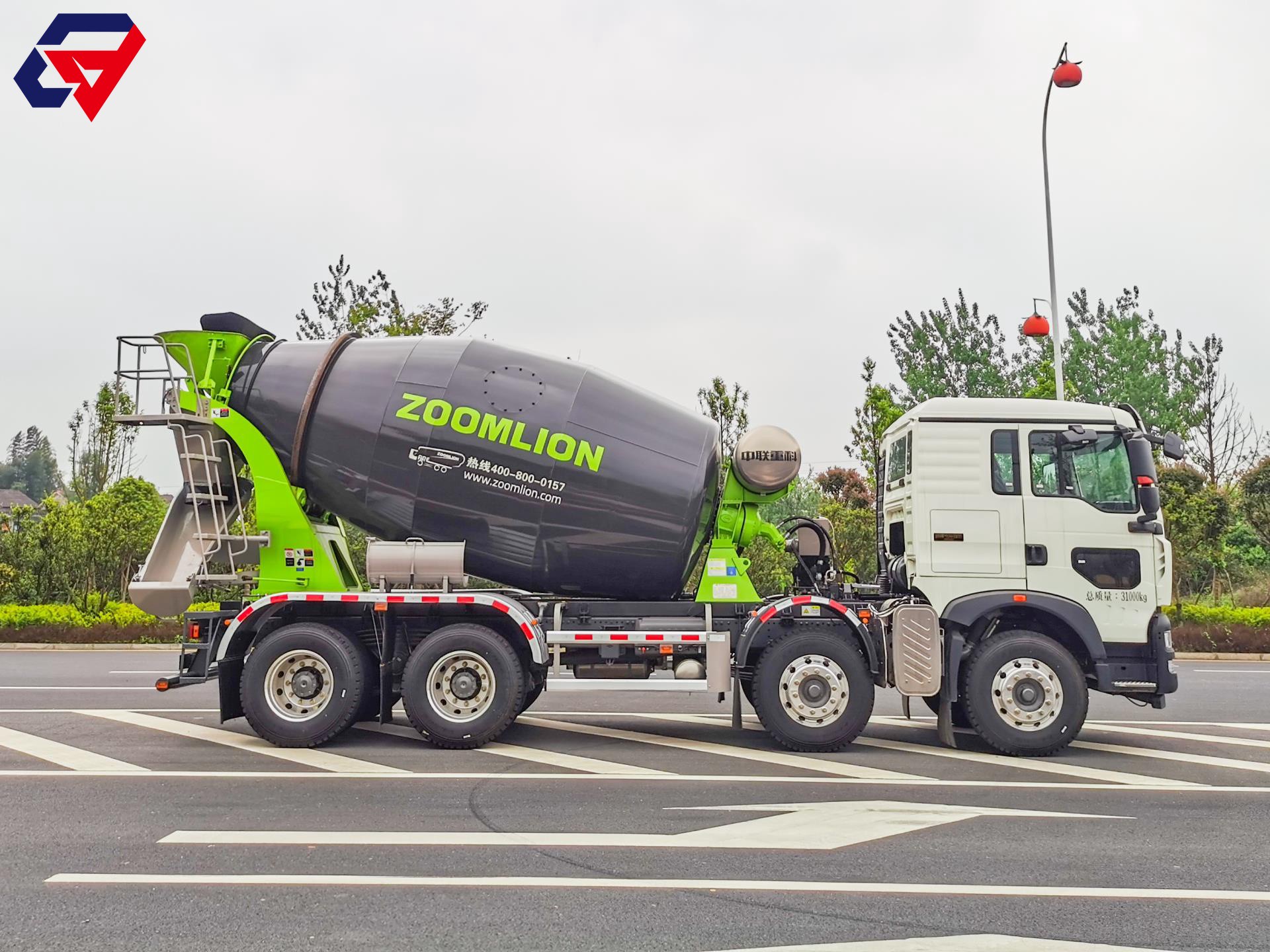
What Is A Cement Mixer?
A cement mixer, also known as a concrete mixer truck, is a specialized heavy-duty vehicle designed to transport and mix concrete during transit. These rotating drum machines maintain the plasticity of concrete from batching plants to construction sites.
Modern cement mixers typically feature hydraulic-driven drums with capacities ranging from 3 to 16 cubic yards. The rotating mechanism prevents concrete segregation and setting, ensuring consistent material quality upon delivery.
Industry standards like ASTM C94 and EN 206 govern cement mixer operations, specifying mixing time, drum rotation speed, and discharge requirements. Compliance ensures structural integrity of poured concrete.
Main Types Of Cement Mixers
Front-discharge mixers dominate North American markets with their improved visibility and maneuverability. These models feature the discharge chute at the truck cab end, allowing precise placement in congested urban sites.
Rear-discharge configurations remain popular in Europe and Asia, offering higher volumetric capacity. Their traditional design facilitates easier maintenance but requires more operating space.
Specialized variants include volumetric mixers that batch concrete on-site, reducing material waste. Off-road mixers with all-wheel drive capabilities serve mining and remote infrastructure projects.
Technical Specifications Breakdown
Drum rotation speed typically ranges between 2-14 RPM, with mixing occurring at 8-12 RPM and discharge at 12-14 RPM. Advanced models feature variable-speed hydraulic systems for optimal concrete consistency control.
Drum materials have evolved from traditional steel to abrasion-resistant alloys with polyurethane liners. These innovations extend service life by 30-40% while reducing weight for improved payload capacity.
Modern cement mixers incorporate telematics systems monitoring drum rotation, material temperature, and GPS location. This data helps optimize delivery routes and prevent concrete quality issues.
Selection Criteria For Buyers
Evaluate project requirements including average delivery distance, site accessibility, and typical concrete volumes. Urban projects benefit from compact 6-8 cubic yard mixers, while large-scale infrastructure needs 10+ yard capacities.
Consider chassis compatibility - most cement mixers mount on standard truck frames, but specialized applications may require reinforced suspensions or additional axles for weight distribution.
Maintenance accessibility significantly impacts operating costs. Look for designs with easy-access grease points, removable wear plates, and simplified hydraulic line routing.
Global Market Applications
Residential construction accounts for 45% of cement mixer deployments, particularly in high-growth housing markets. Commercial projects including office towers and shopping malls require precision mixers with advanced discharge controls.
Infrastructure projects demand heavy-duty mixers capable of continuous operation. Bridge construction often utilizes mixers with extended chutes for over-water pouring operations.
Emerging markets show increasing preference for locally manufactured units like those from Shandong Luqingda Machinery Equipment Co., Ltd., balancing quality with competitive pricing for developing economies.
Industry Trends And Innovations
Electrification of cement mixers gains momentum, with prototype electric models reducing job site emissions by 100%. These solutions particularly benefit urban projects with strict environmental regulations.
Automated cleaning systems now minimize concrete buildup in drums, reducing water usage by up to 40% during washout procedures. This addresses growing environmental concerns in the industry.
Advanced material science introduces self-cleaning drum coatings that repel concrete residue, significantly lowering maintenance requirements and extending equipment lifespan.
Total Cost Of Ownership Analysis
Fuel consumption represents 35-45% of operating costs. Modern aerodynamic designs and engine management systems can reduce fuel usage by 15-20% compared to older models.
Drum maintenance constitutes 25% of lifetime costs. High-quality alloy drums with proper care can operate 8-10 years before requiring replacement, versus 5-7 years for standard models.
Resale values vary significantly by manufacturer reputation. Well-maintained units from established brands retain 40-50% of original value after five years of service.